Building Scholarly Awareness in The Digital Age: A Perspective on The Exegesis of QS. Al-‘Alaq Ayat 1–5 And QS. Taha Ayat 114
Keywords:
Qur'anic exegesis, Digital literacy; , Tafsir al-Thabari, Tafsir al-Mishbah, knowledge-consciousnessAbstract
This study examines the concept of knowledge consciousness (kesadaran berilmu) in the digital era through the lens of Quranic exegesis on QS Al Alaq [96]: 1–5 and QS Taha [20]: 114. Using a qualitative library research method with a comparative tafsir approach, this study juxtaposes classical exegesis (Tafsir Ibnu Katsir and Tafsir al Thabari) with contemporary exegesis (Tafsir al Mishbah by M Quraish Shihab) to examine how the command to "read" (iqra) and the supplication "increase me in knowledge" (Rabbi zidni ilman) can be reappropriated to respond to the challenges of information overload, shallow reading habits, and algorithm driven content consumption in the digital age. The findings show that QS Al Alaq frames reading as an act of worship anchored in divine guidance ("in the name of your Lord") rather than a purely technical skill, while QS Taha 114 models a posture of continuous intellectual humility that resists complacency in the pursuit of knowledge. Integrating these two principles yields a four pillar framework of Quranic digital knowledge consciousness: intentional reading, rigor and verification, epistemic humility, and lifelong learning. This framework offers a spiritually grounded complement to secular models of digital literacy, repositioning the pursuit of knowledge as worship rather than mere information consumption.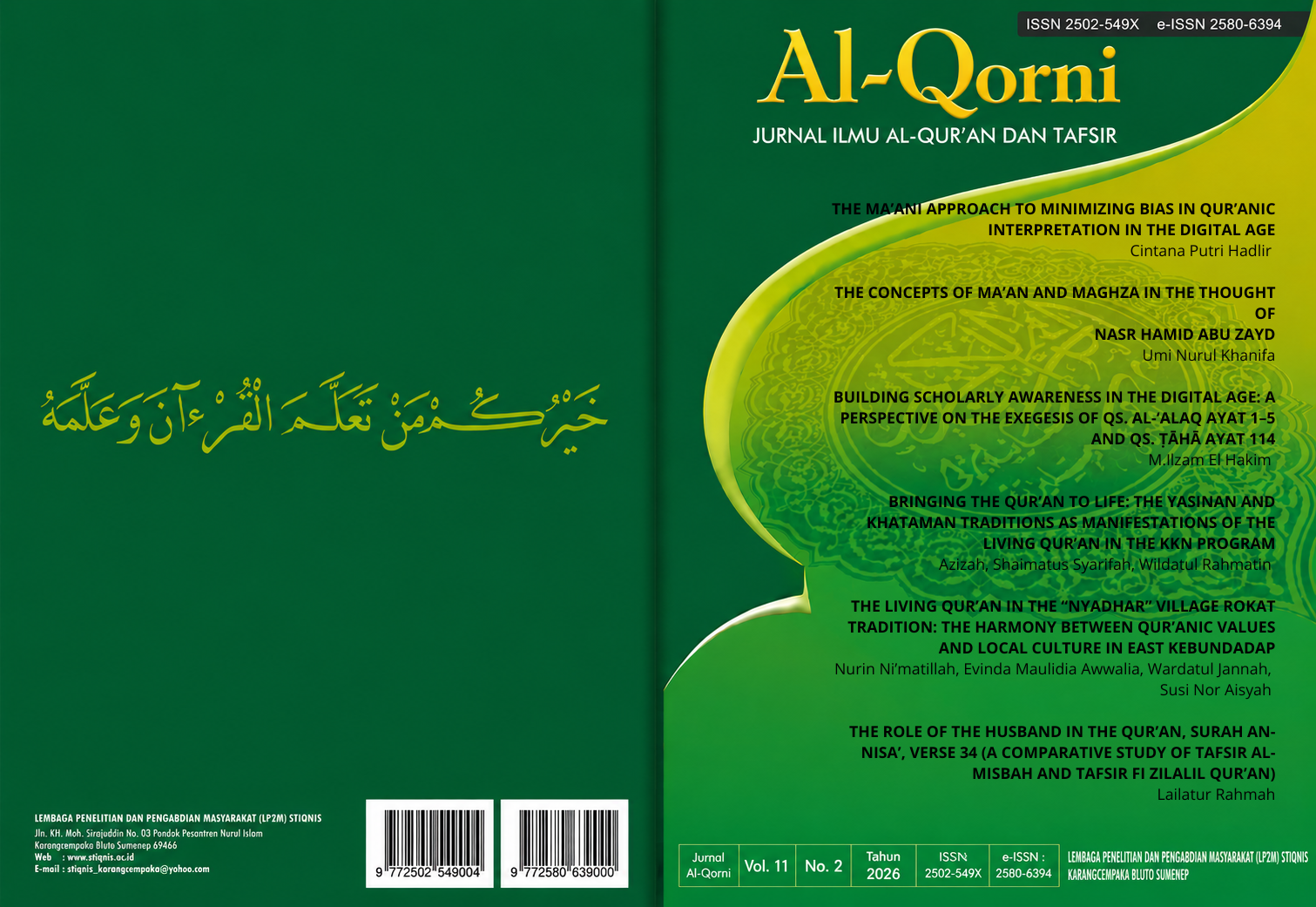
Downloads
Published
2026-08-21
Issue
Section
Articles
License
Copyright (c) 2026 JURNAL ILMU AL-QUR'AN DAN TAFSIR NURUL ISLAM SUMENEP

This work is licensed under a Creative Commons Attribution-NonCommercial-ShareAlike 4.0 International License.
AL-QORNI COPYRIGHT NOTICE
- Seluruh materi yang terdapat dalam situs ini dilindungi oleh undang-undang. Dilarang mengutip sebagian atau seluruh isi situs web ini untuk keperluan komersil tanpa persetujuan dewan penyunting jurnal ini.
- Apabila anda menemukan satu atau beberapa artikel yang terdapat dalam AL-QORNI yang melanggar atau berpotensi melanggar hak cipta yang anda miliki, silahkan laporkan kepada kami, melalui email pada Priciple Contact.
- Aspek legal formal terhadap akses setiap informasi dan artikel yang tercantum dalam situs  jurnal ini mengacu pada ketentuan lisensi Creative Commons Atribusi-ShareAlike (CC BY-SA).
- Semua Informasi yang terdapat di AL-QORNI bersifat akademik. AL-QORNIÂ tidak bertanggung jawab terhadap kerugian yang terjadi karana penyalah gunaan informasi dari situs ini.

